The Calf Kick Explained: Why MMA's Quietest Weapon Changes Fights
What the calf kick is, why it took over MMA, how fighters check it, what it does to stance and movement, and how judges score leg kicks.
It does not look like much. A low, quick swing of the shin. No dramatic spin, no knockdown in slow motion. Then, a round or two later, a fighter is limping, switching stance, unable to put weight on their lead leg. The calf kick has become one of the most effective weapons in mixed martial arts, and one of the most misunderstood.
Here is what it is, why it rose so fast, how fighters defend it, and what it does to everything else in a fight.
Leg kicks, then the calf kick
Leg kicks have been part of striking for as long as there has been Muay Thai, the Thai stand-up art that uses punches, kicks, knees and elbows. The classic low kick in Muay Thai and kickboxing is a round kick, thrown by swinging the hip and turning over, landing with the shin on the outside or inside of an opponent's thigh. Fighters call these thigh kicks or simply leg kicks.
Thigh kicks are powerful, but they are also slow to pay off. The thigh is a big, thick muscle. It takes many clean kicks to compromise it, and a well-conditioned opponent can absorb a surprising amount.
The calf kick changes the target. Instead of the thigh, the shin lands lower, on the back or outside of the lower leg, just below the knee. It is usually thrown at the lead leg (the leg nearer the opponent). The calf has less muscle protecting the nerves and structures underneath, and the lower leg is responsible for a lot of balance and movement. Hit it cleanly and repeatedly, and the effect can arrive much faster.
Fighters describe the result as the leg going numb or "dead". The practical upshot is simple: a fighter who cannot plant their lead foot cannot move well, cannot push off to punch, and cannot defend their position.
Why it rose to prominence
The calf kick is not new. Kickboxers and Muay Thai fighters have thrown low kicks below the knee for decades. But in MMA it went from occasional tool to standard weapon over a relatively short span in the late 2010s and early 2020s, and it is worth understanding why.
MMA stances are often more upright and wider. Fighters need to defend takedowns as well as strikes, so many stand in a way that keeps their weight on the lead leg and their feet planted. That makes the lead calf a very available target.
Many fighters were not trained to check it. Checking (the defence we explain below) is second nature in Muay Thai gyms. Fighters who came up through wrestling or boxing often had little experience of it. When the calf kick spread, plenty of fighters were not ready.
It is low risk. A calf kick is fast and short. It does not require the full hip turn of a heavy thigh kick, so it leaves the kicker less exposed to counters and less likely to be caught and taken down.
It sets everything else up. Once an opponent is worried about the calf, they move differently, and that opens other targets.
Once a few high-profile fights showed how quickly a calf kick could change a bout, coaches across the sport took notice. Within a few years, it was being drilled everywhere, and defending it became a basic requirement.
How to check a kick
The main defence against any low kick is the check. To check, the defending fighter lifts their lead leg and turns the knee and shin out to meet the incoming kick. Shin meets shin, or shin meets knee, instead of shin meeting soft calf. A well-timed check hurts the kicker as much as, or more than, the target.
Checking the calf kick is harder than checking a thigh kick, for a few reasons:
- It is faster. There is less windup, so the defender has less time to react.
- It is lower. The defender has to lift the leg and angle the shin downward to cover the calf.
- It costs balance. Every time you lift your leg, you are standing on one foot. Against a wrestler, that is an invitation to a takedown.
So fighters use a mix of defences:
- Lifting and turning the lead leg to check, when they read the kick early.
- Turning the lead foot out slightly so the kick lands on the shin side rather than the meaty back of the calf.
- Stepping back or shifting weight off the lead leg so the kick has nothing solid to land on.
- Countering with a straight punch the moment the kicker commits, since a fighter on one leg is off balance.
None of these is perfect. That is part of why the calf kick works.
What it does to stance and movement
The real power of the calf kick is not just the damage. It is what the damage forces a fighter to do.
Weight distribution changes. Fighters who are being kicked start shifting their weight to the back leg, keeping the front foot light. That makes checking easier, but a lighter front foot means less power and less stable takedown defence.
Stances narrow or switch. Some fighters move into a narrower, more bladed stance to present less of the lead leg. Others switch stance entirely, swapping which leg is in front. Switching protects a damaged leg, but it may also put a fighter in a stance they are less comfortable in. Our guide to orthodox vs southpaw and the outside foot explains why stance matchups matter so much.
Footwork slows down. A fighter whose lead leg is compromised struggles to circle, cut angles, or retreat quickly. Against a pressure fighter, that can be the difference between escaping the fence and being trapped against it.
Offence dries up. Most power punches start from the legs. If you cannot push off the floor, your punches lose their snap.
This is why calf kicks often look like they are doing little in the first round and then suddenly look like they are winning the fight. The effect accumulates.
Reading the stance diagram
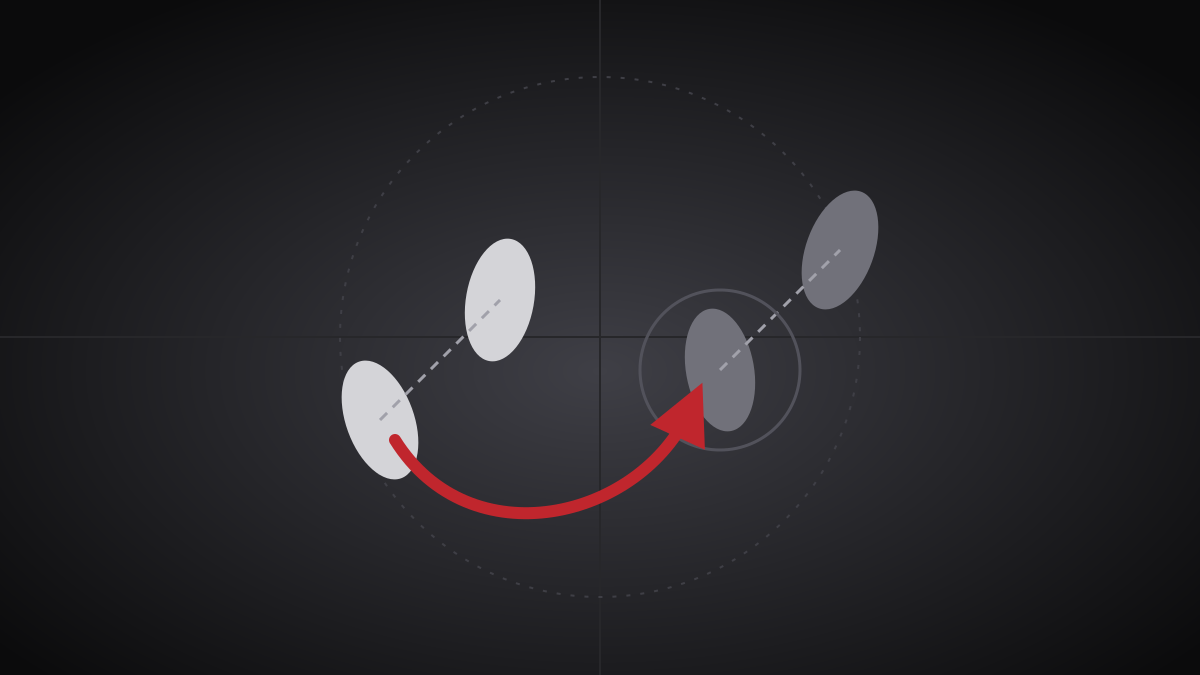
When we break down a fight, we often think about it in a simple overhead view: two pairs of feet, two lines of attack. In an orthodox-versus-orthodox fight, both fighters have their left foot forward. The calf kick usually comes from the kicker's rear leg (the right) to the outside of the opponent's lead (left) calf.
In an open-stance fight (orthodox against southpaw), the lead legs line up on the same side, and the inside of the lead calf becomes a target too. The geometry changes which kicks are available and which counters are waiting.
| Matchup | Most common calf-kick target | Common counter |
|---|---|---|
| Orthodox vs orthodox | Outside of the lead calf | Straight right over the kick |
| Southpaw vs southpaw | Outside of the lead calf | Straight left over the kick |
| Orthodox vs southpaw | Inside of the lead calf | Rear straight down the middle |
| Any vs wide stance | Lead calf, either side | Takedown on the kicking leg |
These are tendencies, not rules. Good fighters throw every version.
How judges score leg kicks
This is the part that fans argue about most. Under the unified MMA judging criteria, judges score effective striking and grappling first, and the key idea is impact. That means strikes that have a visible effect on the opponent count for more than strikes that simply land.
For leg kicks, that creates a clear pattern:
- Early in a fight, calf kicks can look minor. A judge watching a round of calf kicks against a round of punches to the face may lean toward the punches, especially if the kicks are not visibly affecting the opponent yet.
- Once the damage shows, kicks score heavily. A limp, a stumble, a stance switch, or a fighter's leg buckling are all visible impact. At that point, judges should, and often do, credit the kicks strongly.
- A kick that drops someone counts like a knockdown. If a calf kick puts a fighter on the floor, that is significant impact, and it can push a round toward 10-8 territory when combined with other damage.
We go into the 10-8 round and the full criteria in our guide to MMA judging criteria. The short version: leg kicks are underrated on the scorecards early and fairly rated once the impact is obvious. That lag is one reason why fighters who rely on calf kicks sometimes drop a close early round before taking over.
On our own cards, we try to credit leg kicks for what they are doing, not just what they look like. A kick that makes a fighter stop moving forward is effective striking, even if it does not make the highlight reel.
What to watch next time
Next time you watch a fight, keep an eye on the legs for the first few minutes.
- Is someone throwing low kicks to the calf, not the thigh?
- Is the other fighter checking, or just absorbing them?
- Has anyone's lead foot gone light, or has anyone switched stance?
- Are the kicker's punches landing more often as the round goes on?
If the answers start piling up, you will see a fight change before the commentators mention it.
The last word
The calf kick is small, fast and unglamorous. It is also one of the most important developments in MMA striking in recent years. It punishes heavy, planted stances, forces fighters to rethink how they stand and move, and asks judges to score something that does not always look dramatic. Learn to watch the lead leg, and a lot of fights start to make more sense.