Building a Record: How the British Small-Hall Circuit Works
From four-round debuts in leisure centres to the Lonsdale belt, here is how British professional boxers climb the domestic title ladder, step by step.
Before the arenas, there are the halls. Leisure centres, hotel function rooms, working men's clubs, sports halls with the basketball lines still on the floor. This is where almost every British professional boxer starts. Four rounds, a few hundred fans, and a long way to go.
This is how the British small-hall circuit works, and how a fighter climbs from it toward the titles that still mean so much in this country.
What a small-hall show is
A small-hall show is a professional boxing card held at a modest venue, usually with a local or regional promoter. There may be eight or ten fights on the bill. Most are short. Many involve boxers early in their careers, fighting in front of family, friends and their local gym.
The shows are not usually televised in a big way. The money comes mostly from tickets. That has a direct effect on the boxers, because on many small-hall bills a fighter's earnings are linked to how many tickets they sell. A boxer who can bring a coach load of supporters becomes valuable to a promoter. A boxer who cannot may struggle to get regular dates, however talented.
It is not glamorous. But it is the foundation of British boxing, and the atmosphere in a packed small hall can rival anything in the sport.
The governing body
Professional boxing in Britain is regulated by the British Boxing Board of Control, usually called the BBBofC or simply the Board. It was founded in 1929.
The Board licenses boxers, managers, promoters, trainers, referees, judges and other officials. It sets the rules a licensed show must follow, oversees medical requirements for licence holders, and sanctions the domestic championships, from area titles up to the British title.
Anyone who wants to box professionally in Britain needs a licence from the Board. The licensing process includes medical checks. We will not go into individual cases. Our editorial policy is clear: we never publish rumours about any fighter's health.
Four-rounders and six-rounders
Professional rounds in men's boxing are three minutes long, with a minute's rest between them.
A new professional usually starts with four-round fights. These are short enough that a debutant can learn the pace of the pro game, which is very different from the amateur game, without being thrown in too deep. Many British pros spend their first several fights at this distance.
After that come six-rounders, and then eight-rounders. Each step asks more: more stamina, more patience, more ability to change the plan mid-fight. A boxer who looked brilliant over four rounds may find six a very different test.
| Stage | Typical distance | What the boxer is learning |
|---|---|---|
| Debut and early fights | 4 rounds | Pro pace, smaller gloves, no headguard, the crowd |
| Developing | 6 rounds | Pacing, stamina, adjusting mid-fight |
| Rising prospect | 8 rounds | Sustained pressure, tougher opponents |
| Title level | 10 rounds | Area and English championships |
| British level and above | 12 rounds | Championship distance |
The opponents nobody talks about enough
Early-career fights are usually against experienced opponents often called journeymen. These are professional boxers, frequently with long records showing more losses than wins, who take fights at short notice, travel to the other fighter's home show, and give a young boxer real rounds of experience.
It is easy to look at a journeyman's record and sneer. That is a mistake. Many are skilled, durable, clever boxers who know exactly how to survive, how to make a young fighter think, and how to look after themselves. Without them, the small-hall system would not work. We have enormous respect for them.
Scoring on small-hall shows deserves a note too. Britain has a long tradition of the referee alone scoring many non-title fights, rather than three ringside judges. Championship contests, including British title fights, use three judges. We explain the scoring system itself in our guide to how a boxing round is actually scored.
The domestic title ladder
Once a boxer has a winning record and some experience, the titles begin. British boxing has a clear ladder, and each rung means something.
Area titles
The first rung is usually an area title. The Board divides the country into regional areas, covering the English regions as well as Scotland, Wales and Northern Ireland, and an area can crown its own champion at each weight. Area title fights are typically scheduled for ten rounds.
An area belt is often the first championship a fighter wins. It is a sign they are a serious domestic contender.
The English title
Next comes the English title, open to boxers eligible to fight for it under the Board's rules. It is also usually a ten-round fight, and it is a common stepping stone toward the British title.
The British title and the Lonsdale belt
The British title is the big one domestically. It is fought over twelve rounds, and the belt itself is the Lonsdale belt, named after the Earl of Lonsdale. Its history goes back to the National Sporting Club in the early twentieth century, before the Board took over the championship.
There is a famous tradition attached to it. A boxer who wins three British title fights at the same weight earns the right to keep the Lonsdale belt outright. Most champions never manage it. Those who do have achieved something genuinely rare.
Eligibility for the British title is set by the Board, and the rules on nationality and residency have changed over the years. If a specific boxer's eligibility matters, the Board's current rules are the place to check.
| Rung | Sanctioning body | Usual distance | What it signals |
|---|---|---|---|
| Area title | BBBofC | 10 rounds | Serious regional contender |
| English title | BBBofC | 10 rounds | One of the best in England at the weight |
| British title (Lonsdale belt) | BBBofC | 12 rounds | The best in Britain at the weight |
| Commonwealth title | Commonwealth Boxing Council | 12 rounds | Among the best across the Commonwealth |
| European title | European Boxing Union (EBU) | 12 rounds | One of the best in Europe; often a step toward world level |
Beyond Britain: Commonwealth and European
Above the British title sit two international titles that British boxers have a long tradition of chasing.
The Commonwealth title is sanctioned by the Commonwealth Boxing Council and is open to boxers from Commonwealth nations. It brings British fighters into contact with opponents from across the Commonwealth, and it is often fought for alongside, or soon after, the British title.
The European title is sanctioned by the European Boxing Union, the EBU. It covers the continent and tends to be a serious test, because the best European fighters at a weight are often close to world level themselves. Winning the European title has long been a recognised step toward a world title opportunity.
Above that come the world sanctioning bodies and their many belts. We will look at how those work, and what rankings really measure, in our piece on how we build our rankings.
Why the ladder still matters
There is a temptation in modern boxing to skip rungs. A talented, well-backed prospect can move quickly to regional belts from world sanctioning bodies, or straight toward world-level fights.
We understand why. But the domestic ladder has real value. It tests fighters against opponents who know them, often in front of rival crowds. It builds rivalries that fans care about. And a British title fight between two hungry domestic fighters is often a better contest than a mismatched "world" fight on a bigger stage.
In the gym where Marcus coaches, the teenagers do not talk about world titles first. They talk about the Lonsdale belt. That says something.
From the hall to the arena
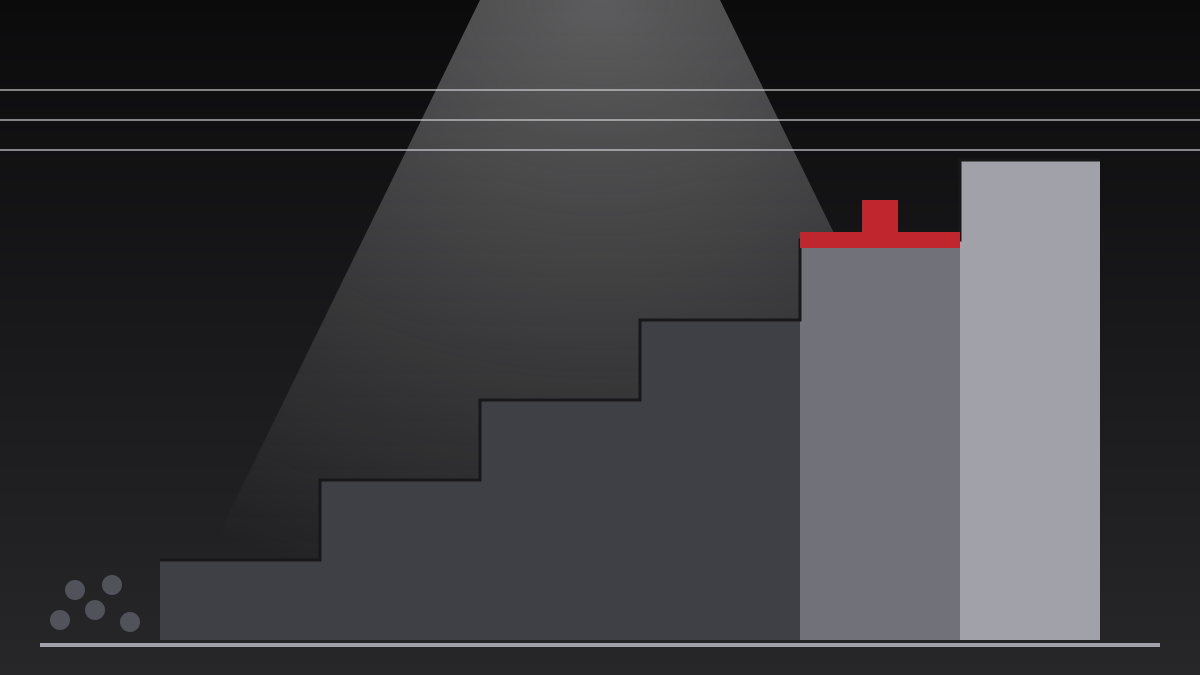
The route is long. Four-rounders in front of a few hundred people. Six-rounders. Eight-rounders. An area title, maybe. An English title. Then, for a few, the British title and the chance to take a Lonsdale belt home for good.
Most boxers never reach the top rungs. That does not make the climb any less worth respecting. Every fighter on a small-hall bill has done the work, made the weight and stepped through the ropes. That is more than most of us will ever do.